

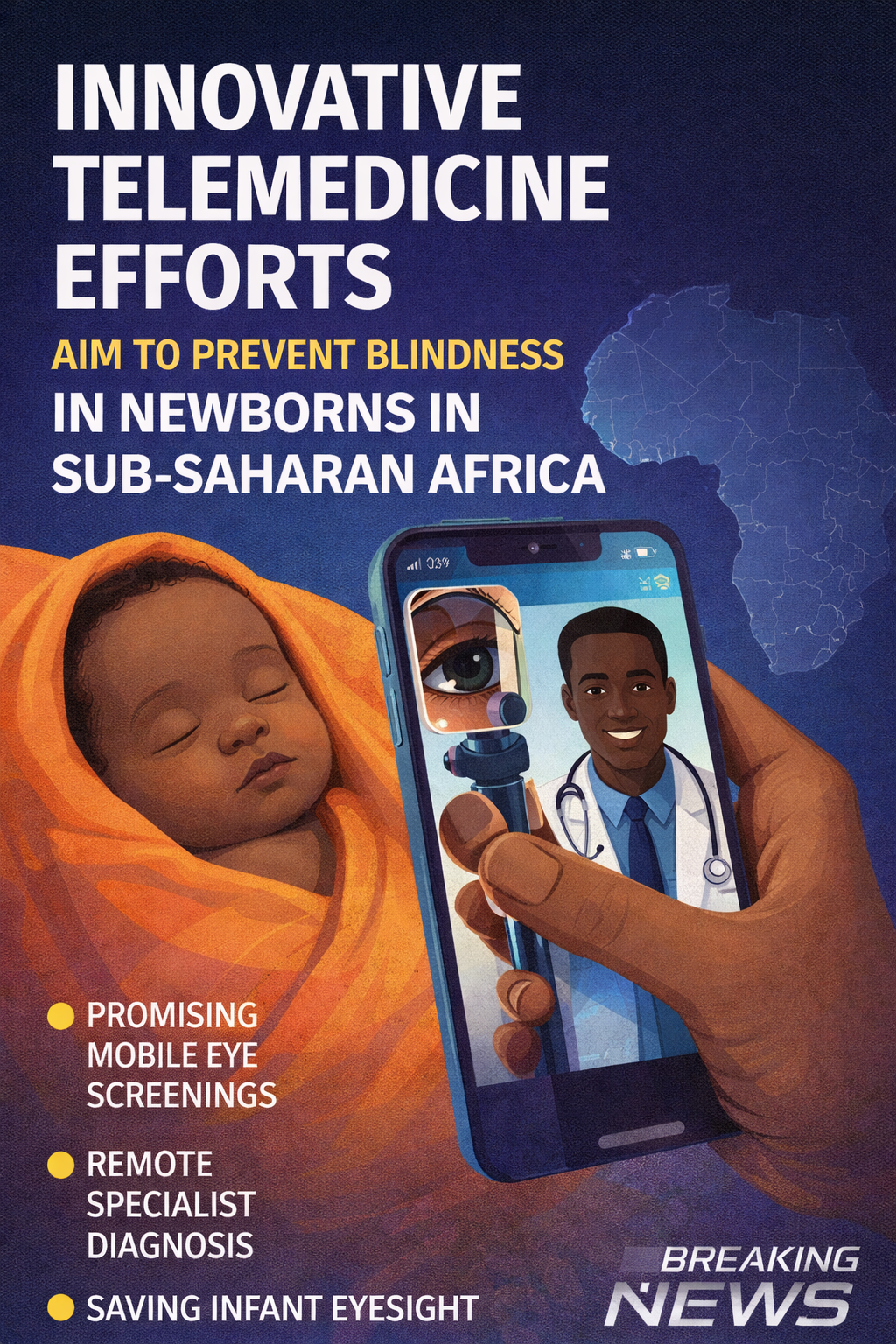
Innovative Telemedicine Efforts Aim to Prevent Blindness in Newborns in Sub-Saharan Africa
In Sub-Saharan Africa, a groundbreaking telemedicine initiative is underway to combat preventable blindness in newborns. This effort, spearheaded by Stanford University, focuses on the early detection and treatment of retinopathy of prematurity (ROP), a condition that can lead to blindness in premature infants. The initiative leverages technology to bridge the gap in access to specialized eye care, which is scarce in many parts of the region.
ROP is a major cause of childhood blindness worldwide, particularly affecting infants born prematurely. In developed countries, routine screening and timely intervention have significantly reduced the incidence of blindness due to ROP. However, in Sub-Saharan Africa, where healthcare resources are limited, the condition often goes undiagnosed and untreated, leading to irreversible vision loss.
The telemedicine project utilizes a network of trained healthcare professionals who capture high-quality images of infants' retinas using portable cameras. These images are then transmitted to expert ophthalmologists for remote analysis and diagnosis. This approach not only facilitates early detection but also allows for prompt treatment decisions, which are crucial in preventing the progression of ROP to more severe stages.
Dr. Darius Moshfeghi, a professor of ophthalmology at Stanford, highlighted the importance of this initiative, stating that "telemedicine can revolutionize the way we approach eye care in resource-limited settings." By providing access to expert evaluations without the need for physical presence, telemedicine can significantly enhance the quality of care available to these vulnerable populations.
The success of this program hinges on collaboration between local healthcare providers and international experts. Training local staff to operate the imaging equipment and manage the data transmission is a critical component of the initiative. This capacity-building effort ensures that the program is sustainable and can be integrated into existing healthcare frameworks in the region.
Moreover, the program is designed to be scalable, with the potential to expand to other regions facing similar challenges. By demonstrating the effectiveness of telemedicine in addressing ROP, the initiative could pave the way for broader applications in other areas of pediatric healthcare.
While the project is still in its early stages, initial outcomes are promising. Early detection rates have improved, and more infants are receiving timely treatment, reducing the risk of blindness. The program also highlights the potential of telemedicine to overcome geographical and logistical barriers in healthcare delivery.
As telemedicine continues to evolve, its role in global health, particularly in underserved regions, is likely to expand. The success of this initiative could serve as a model for other telemedicine projects aimed at addressing critical healthcare needs in low-resource settings.
Sources
- Pioneering Telemedicine Solutions to Save Sight of Blind Babies in Sub-Saharan Africa - This article discusses a telemedicine initiative by Stanford University to prevent blindness in newborns in Sub-Saharan Africa.









Be the first to comment.